A research team from Beijing University of Civil Engineering and Architecture has recently introduced an innovative artificial intelligence model, titled “Meet the Silk Road,” designed to digitally restore ancient murals along the historic Silk Road. The lightweight system aims to address long-standing challenges in cultural heritage preservation by enabling automated damage detection, virtual restoration, and high-resolution image reconstruction.

Fig. 1 Damaged silk road murals.
Murals, as vital carriers of historical and cultural information, often suffer from complex forms of deterioration due to aging, environmental exposure, and irreversible historical damage. Traditional restoration methods rely heavily on manual expertise, making them time-consuming, costly, and difficult to scale. Meanwhile, most existing AI models are optimized for natural images and face limitations in mural restoration, including high computational demands, slow inference speeds, lack of domain specificity, and potential data security concerns in cultural heritage contexts.
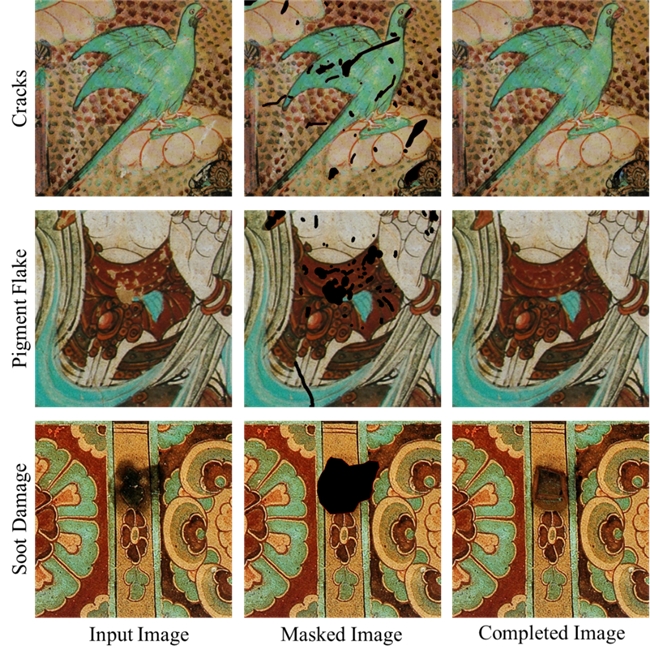
Fig. 2 The model's inpaint performance under different deterioration.
To tackle these challenges, the “Meet the Silk Road” project proposes a comprehensive technical framework covering three key stages: damage detection, virtual restoration, and super-resolution reconstruction.
For damage detection, the team developed a joint segmentation model with dynamic feature enhancement, enabling precise identification of subtle and discontinuous deterioration patterns. In the restoration phase, the model integrates spatial-frequency collaboration with semantic guidance, significantly improving structural consistency and texture fidelity. For image reconstruction, a parallel decoupled architecture is adopted to build a lightweight super-resolution model that reduces computational costs while maintaining high-quality outputs.
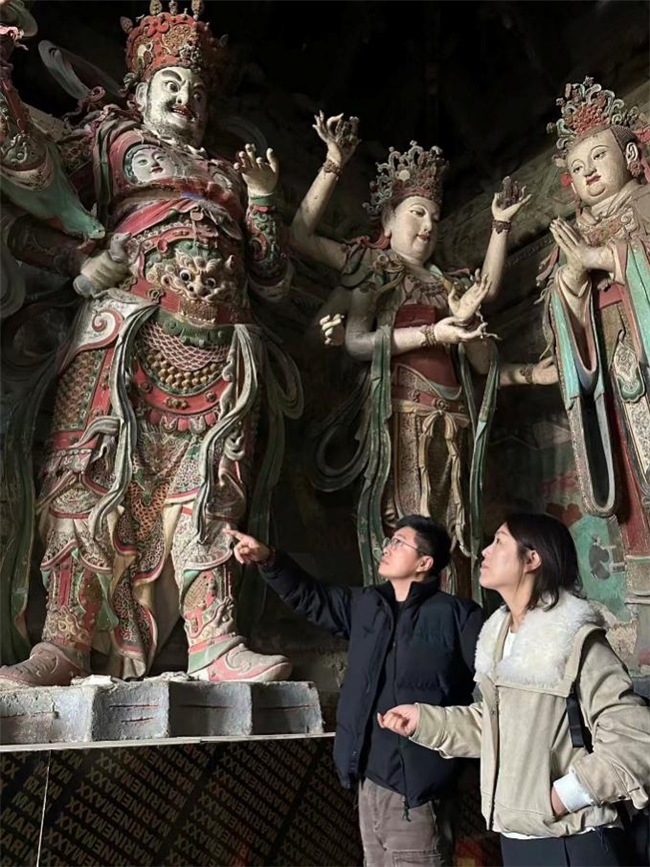
Fig. 3 The team conducted research at ancient cultural sites.
Compared with conventional high-computation vision models, the proposed system demonstrates clear advantages in model size, parameter efficiency, and inference speed. It supports deployment on standard hardware devices, allowing faster processing of individual images while meeting the practical needs of cultural institutions for efficiency and data security.
The project has already achieved initial results, including academic publications, patent applications, and recognition in innovation and entrepreneurship competitions. The interdisciplinary team brings together expertise from remote sensing, geomatics engineering, and artificial intelligence, reflecting a growing trend of cross-domain collaboration in digital heritage preservation.
Looking ahead, the team plans to further expand the system’s capabilities, focusing on advanced damage recognition, multi-scenario deployment, multilingual support for Belt and Road regions, and the construction of a digital mural resource database. By leveraging lightweight AI technologies, the project aims to provide scalable, secure, and efficient solutions for museums, research institutions, and digital exhibition platforms worldwide.