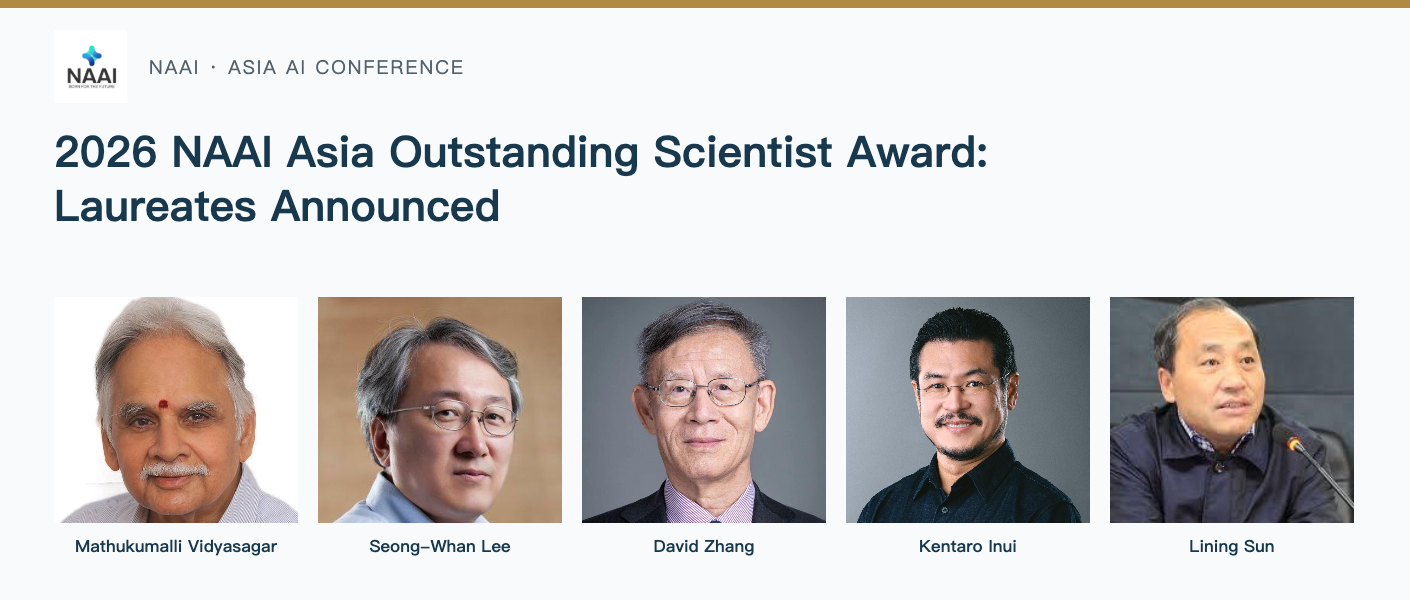
The National Academy of Artificial Intelligence (NAAI) announces the recipients of the 2026 NAAI Asia Outstanding Scientist Award: Professors Mathukumalli Vidyasagar, Seong-Whan Lee, David Zhang, Kentaro Inui and Lining Sun.
The five laureates work across learning theory, pattern recognition, biometrics, natural language processing and robotics, reflecting the breadth of research connecting the foundations of artificial intelligence with its applications.
The Laureates
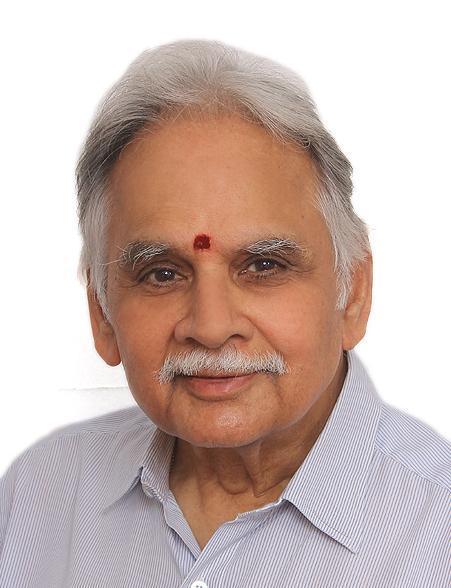
Mathukumalli Vidyasagar
Indian Institute of Technology Hyderabad
Professor Vidyasagar is a Distinguished Professor at the Indian Institute of Technology Hyderabad. His research spans systems and control theory, statistical learning theory and computational biology. He previously served as Director of India’s Centre for Artificial Intelligence and Robotics.
His work in nonlinear systems and robust control addresses feedback-system stability, controller design and randomised methods. Books including Nonlinear Systems Analysis and A Theory of Learning and Generalization connect control-system analysis with the mathematical foundations of machine learning and are important references in these fields.
His more recent interests include nonconvex optimisation, reinforcement learning and machine-learning methods in the computational biology of cancer. He is a Fellow of the Royal Society and IEEE, and has received the IEEE Control Systems Award and the ASME Rufus Oldenburger Medal.
Seong-Whan Lee
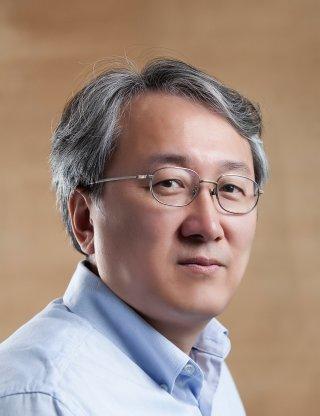
Korea University
Professor Lee is a professor at Korea University, working in artificial intelligence, pattern recognition, computer vision and brain–computer interfaces. His research investigates how machines can interpret images, human actions and brain signals.
In brain–computer interfaces, he applies deep learning to non-invasive EEG analysis, including motor-intention recognition, brain-signal decoding and human–machine interaction. This work explores assistive communication, robot control and neurorehabilitation. His research also covers face recognition, 3D pose estimation, action recognition and speech generation.
His team contributed to the development of the AI curling robot Curly, reported in Science Robotics, demonstrating an approach combining perception, strategy learning and robotic action control. He is a Fellow of IEEE, IAPR and the Korean Academy of Science and Technology.
David Zhang
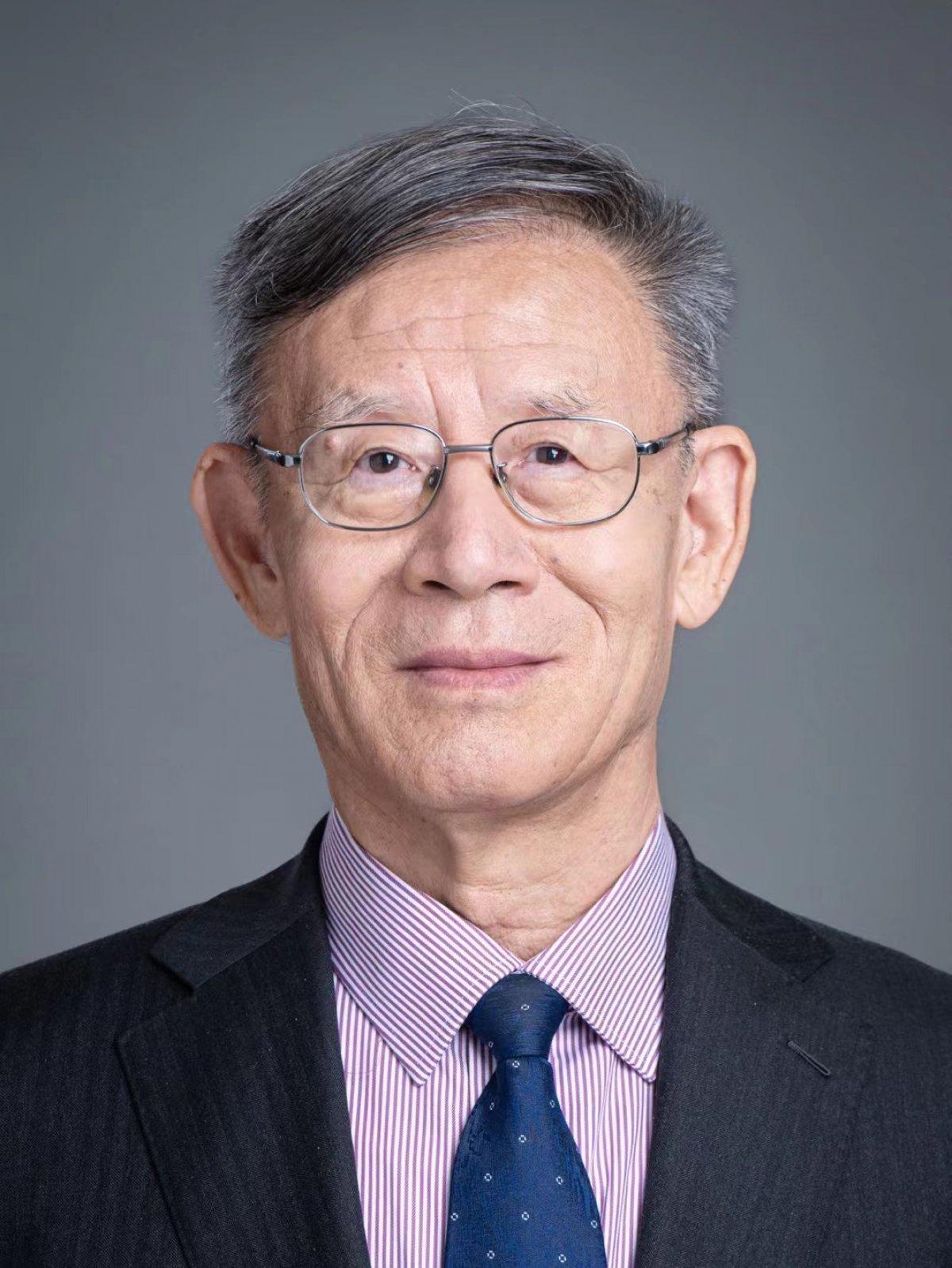
The Chinese University of Hong Kong, Shenzhen
Professor Zhang is an X.Q. Deng Presidential Chair Professor at The Chinese University of Hong Kong, Shenzhen. He has long worked in pattern recognition, image processing and biometrics, with representative contributions to palmprint recognition and the quantitative analysis of diagnostic information in traditional Chinese medicine.
His research has advanced palmprint acquisition, feature extraction and identity verification while extending computer-vision methods to healthcare. In 2025, research he co-supervised on touchless palm sensing was published in Nature Communications. The method uses palm adjustment and dynamic registration to improve touchless recognition; he was one of the paper’s corresponding authors.
He is a Fellow of the Royal Society of Canada, a Fellow of the Canadian Academy of Engineering and an IEEE Life Fellow. In 2025, he received the 2024 Wu Wenjun Artificial Intelligence Science and Technology Contribution Award. His work connects recognition methods, sensing devices and practical applications.
Kentaro Inui
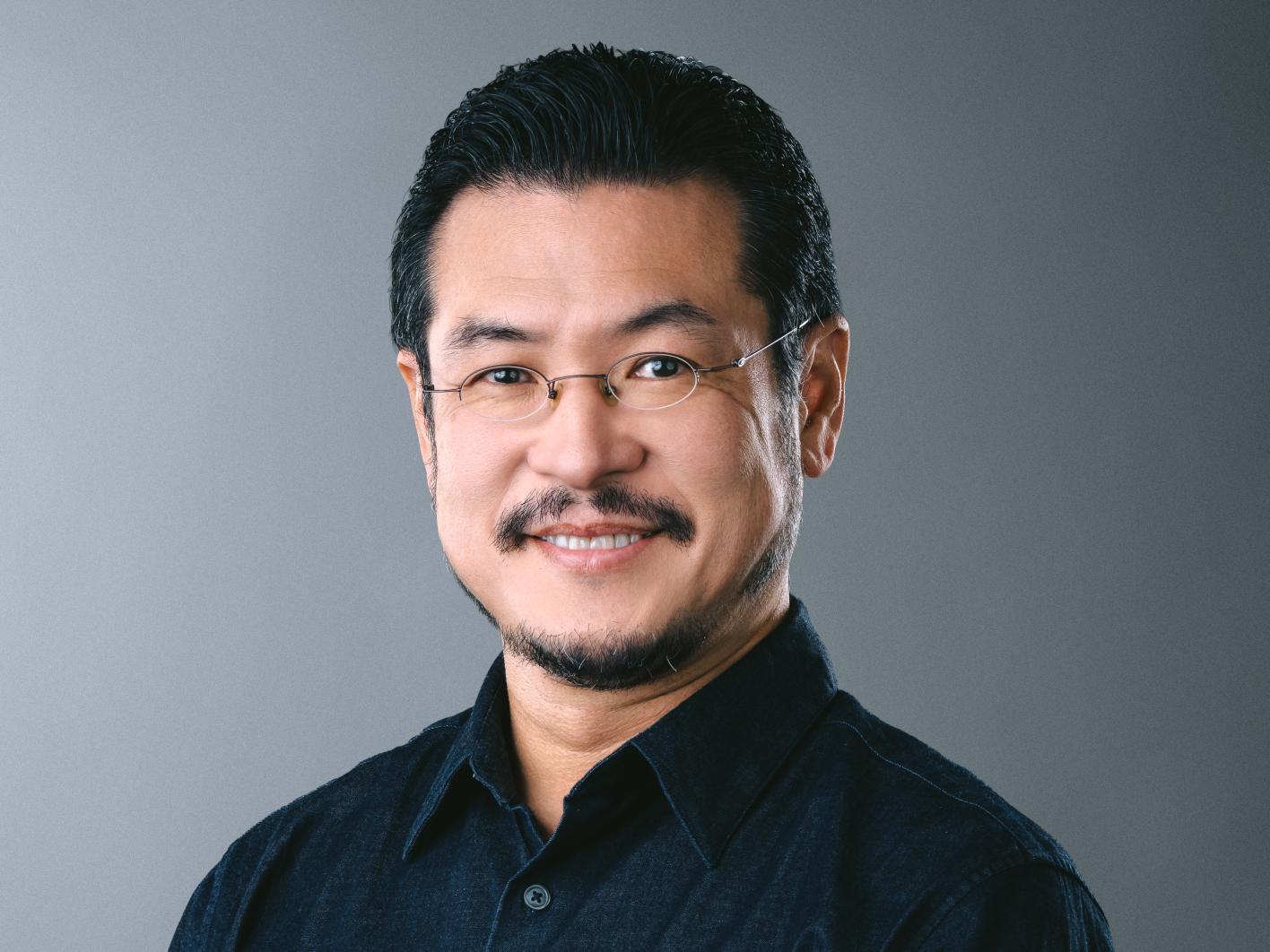
Tohoku University; Mohamed bin Zayed University of Artificial Intelligence
Professor Inui is a Professor of Natural Language Processing at Mohamed bin Zayed University of Artificial Intelligence and maintains academic links with Tohoku University, where he previously led the natural-language-processing group for more than a decade. His work spans language understanding, semantic analysis and language models.
He investigates how machines interpret semantic relationships and reasoning in text, and how language models represent knowledge internally. His recent research examines the interpretability of language and multimodal models, seeking explanations for model decisions and connections with areas such as cognitive science.
He also applies natural language processing to education through explainable writing assessment, argumentation analysis and learning support. His distinctions include the MEXT Minister’s Commendation for Science and Technology, a Google Focused Research Award and multiple paper awards. He has served as Chairperson of Japan’s Association for Natural Language Processing and General Chair of EMNLP-IJCNLP 2019.
Lining Sun
Soochow University
Professor Sun is a professor at Soochow University whose research encompasses robotics, micro- and nanoscale manipulation, and intelligent equipment. His work covers industrial and medical robots, precision manipulation and related core technologies. He is a recipient of the National Science Fund for Distinguished Young Scholars.
His research combines mechanism design, sensing, control and system integration to address precise manipulation of small objects and robotic operation in complex environments. It connects manufacturing, healthcare and microscale experimentation, advancing more flexible sensing and manipulation capabilities.
In 2026, a collaborative team’s research in which he participated on a liquid-metal universal gripper was published in Nature Communications. Electrochemical and magnetic-field control enabled compliant grasping and active release across multiple scales. His distinctions include the National Innovation Award and a Ho Leung Ho Lee Foundation Science and Technology Award.
Awards Review Committee
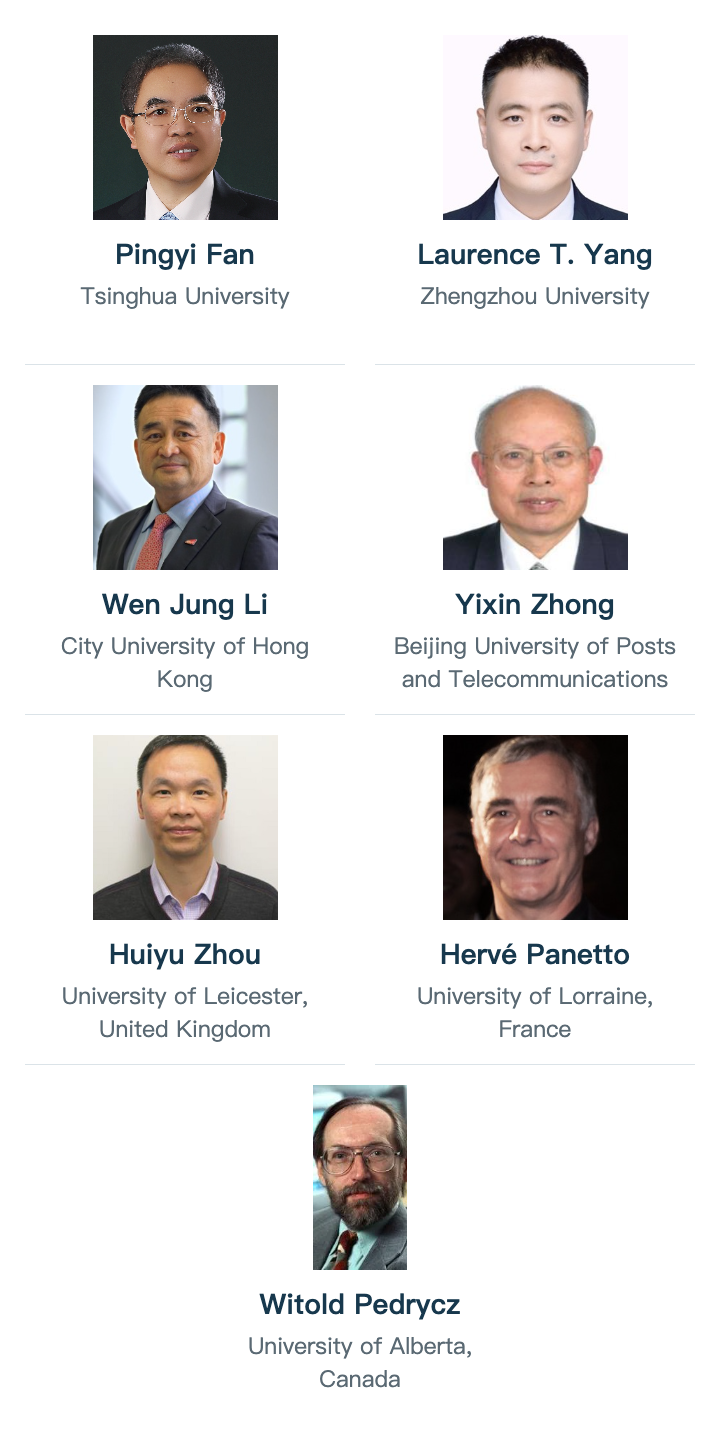
Tsinghua University
Tenured Professor in Electronic Engineering and IET Fellow. His research spans machine learning, information theory and wireless communications. His distinctions include a China Institute of Communications Natural Science Award, Second Prize, and international conference best paper awards.
Laurence T. Yang
Zhengzhou University
Academic Vice-President, Fellow of the Canadian Academy of Engineering and IEEE Fellow. He researches cyber-physical-social systems, parallel and distributed computing, and data analytics. He received the 2026 IEEE Computer Society Edward J. McCluskey Technical Achievement Award.
Wen Jung Li
City University of Hong Kong
Chair Professor and Fellow of IEEE and ASME. His research encompasses micro- and nanorobotics, intelligent sensing and microelectromechanical systems. He has also been elected an International Fellow of the Canadian Academy of Engineering.
Yixin Zhong
Beijing University of Posts and Telecommunications
Professor whose work addresses the foundations of information science and artificial intelligence. He received the Achievement Award in the inaugural Wu Wenjun Artificial Intelligence Science and Technology Awards.
Huiyu Zhou
University of Leicester, United Kingdom
Professor of Machine Learning, heading the AI and Machine Learning Group and the Biomedical Image Processing Lab. He researches computer vision and AI for healthcare. His distinctions include the MIUA 2020 Best Paper Award and a CVIU Most Cited Paper Award.
Hervé Panetto
University of Lorraine, France
Professor and Member of Academia Europaea. His research covers enterprise information-system modelling, semantics and systems interoperability, with applications in intelligent manufacturing. His distinctions include outstanding service awards from IFAC and INCOSE.
Witold Pedrycz
University of Alberta, Canada
Professor, Fellow of the Royal Society of Canada and IEEE Fellow. His research spans computational intelligence, fuzzy systems, granular computing and data mining. His distinctions include a Killam Prize and the IEEE Systems, Man, and Cybernetics Society Norbert Wiener Award.
Conference and Awards Ceremony
NAAI congratulates all five laureates. The Second NAAI Asia Artificial Intelligence Conference (Asia Annual Meeting) will take place in Hong Kong on 30 November 2026. Arrangements for the awards ceremony will be provided in the conference notices and subsequent programme.
Selection and Voting Procedure
An initial shortlist is selected by the Selection Committee. The final award recipients are determined by a vote of all members of the Awards Review Committee. A candidate must receive affirmative votes from at least five reviewers to receive an award.